
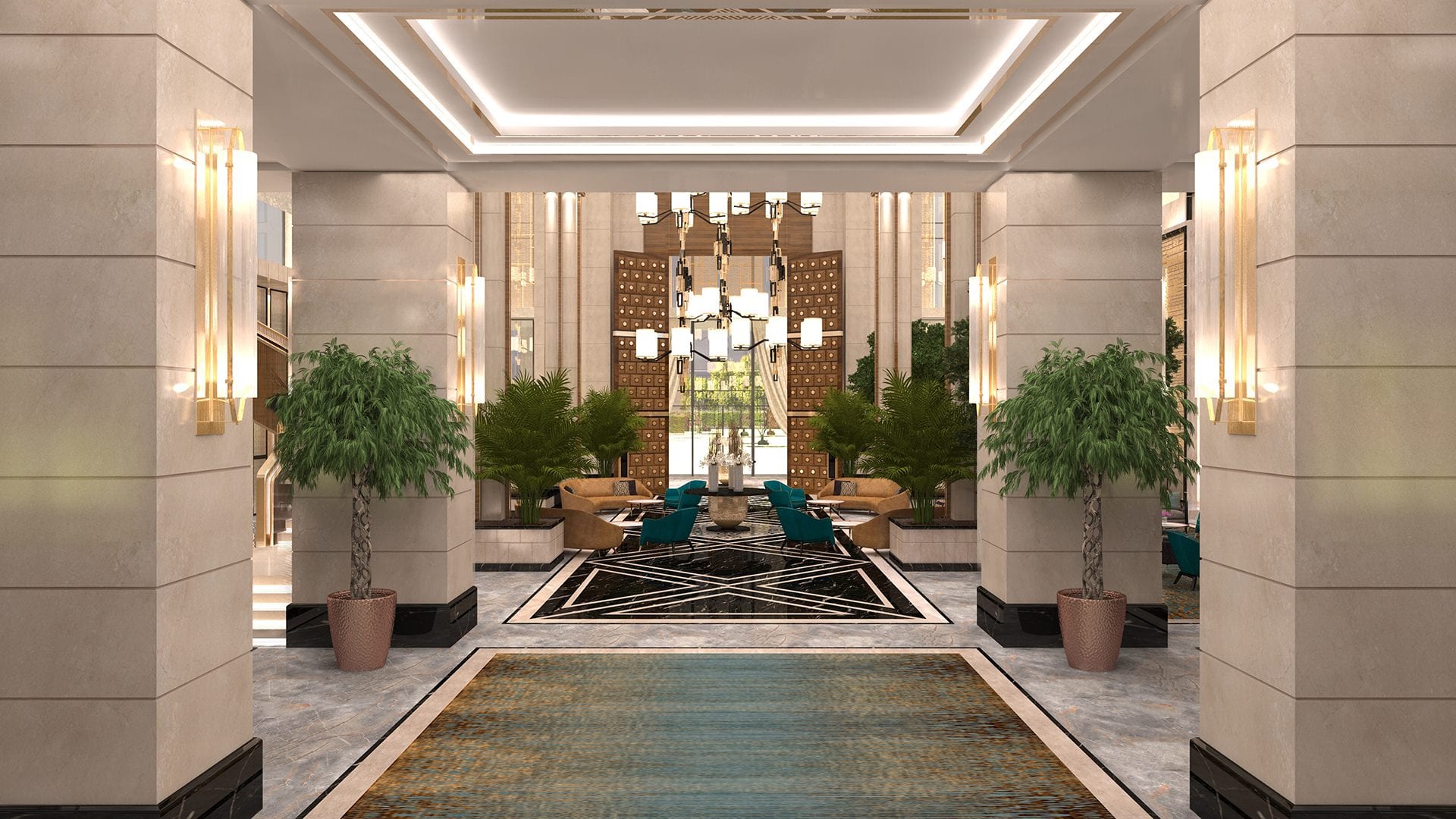
Hilton Erbil
Interior Design ProjectProject Facts
- Project: Hilton Erbil
- Office and role: Hande Tözün Interior Design Studio / Lead Designer
- Year: 2016
- Location: Erbil, IRAQ
- Project type: Hotel Interior Design
- Software: Cinema4D, V-Ray, Photoshop, InDesign
Designed Areas
- Lobby with 2 Bars, Lounge area, Media room, Business center
- Sports Bar
- Pizza Restaurant
- All-day dining restaurant
- Pool bar
- Indoor and outdoor pools
- Spa & Wellness center
- Ballrooms
- Numerous meeting rooms of various sizes
- Guest rooms: standard, twin, deluxe, connecting rooms, presidential suites, executive floor
Project Description
Hilton Erbil was designed between 2015 and 2016 during my tenure as Lead Designer at Hande Tözün Interior Design Studio. Situated in the heart of Erbil, the capital of the Kurdistan Region in Northern Iraq, the project aimed to create a landmark destination that combined hospitality, business, and leisure under one roof.
The design encompassed a vast array of facilities, beginning with a striking lobby featuring two elegant bars, a spacious lounge area, a media room, and a fully equipped business center. On the upper floors, guests could enjoy tailored dining options, including a sports bar designed in the style of an Irish pub, alongside a pizza restaurant and a vibrant all-day dining venue. Recreational spaces were seamlessly integrated, offering indoor and outdoor pools, a poolside bar, and a state-of-the-art spa and wellness center.
For events and corporate needs, the hotel included a grand ballroom and flexible meeting rooms in various sizes. The accommodation units were thoughtfully diversified, ranging from standard and twin rooms to deluxe and connecting units, as well as presidential suites and an exclusive executive floor.
The scope of work involved full concept design, detailed technical drawings, and tender documentation. Although the project has not yet been realized due to the political conditions in the region at the time, Hilton Erbil remains a comprehensive and well-documented example of large-scale hospitality design, blending international standards with local context.
International Standard Interior Design and Project Management in Erbil
In the rapidly developing skyline of Erbil, we offer international standard solutions for investors searching for the best interior designers in Erbil that combine aesthetics and functionality. We approach our projects not only as visual designs but also with an engineering vision that fully complies with global specifications and technical details. From 5-star hotel projects to luxury residential complexes, we add value to the dynamic structure of Erbil by applying global quality management principles at every stage of the design.
Large-Scale Commercial Spaces and Luxury Hospitality Designs
With our project management and consultancy services required for large-scale projects, we meticulously manage the interior spatial arrangement of complex structures. In the design of commercial spaces, SPA centers, ballrooms, and high-capacity accommodation projects (hotel towers) in Erbil, we optimize client demands with technical requirements. We make a difference in the sector with our designs that increase the leasable commercial value of independent sections, prioritize the user experience, and reflect all the requirements of modern architecture.
Turnkey Solutions and Professional Design Vision
As Murat Yüksel, we professionally conduct the entire process from the beginning of the design to the construction stage in the projects we realize in Erbil. In line with our goal of being among the "best interior designers in Erbil", we combine the unique character of each project with our knowledge of luxury segment materials and our advanced technical application skills. From modern offices to prestigious hotel suites, we continue to build spaces that respect local culture and master the universal design language across a wide spectrum.